
Young People Lead the Conversation in Parliament
Location: United Kingdom
Oliver Chantler

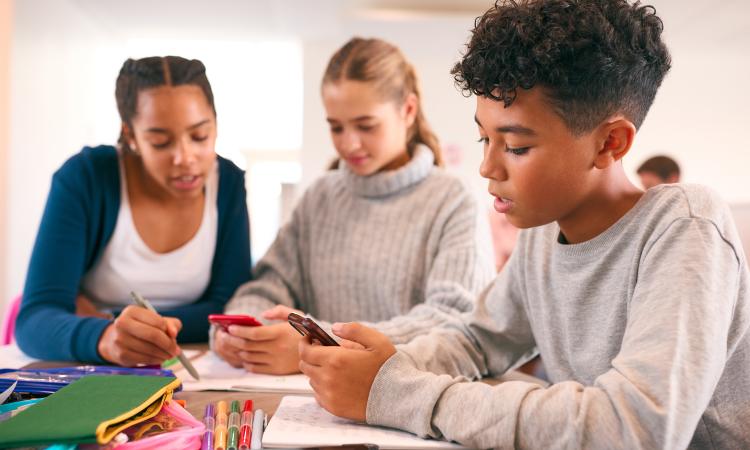
On 2 March 2026, the Mental Health Foundation and Liz Twist MP brought together young activists, civil society leaders, clinicians, and policymakers for a vital conversation in Parliament about the pressing issue of how to keep children safe in the online world.
The roundtable took place as the government considers whether to ban under‑16s from social media: a proposal that has sparked intense debate across the country. AI and Online Safety Minister Kanishka Narayan joined the session to outline the Government’s Growing Up in the Online World consultation and hear from participants.
A shared understanding: the status quo is not acceptable
Across the room, there was clear agreement on one thing: too many children are being harmed by the way social media currently works. Our own review of the evidence shows that excessive or passive social media use is linked with increased risk of depression, anxiety, and loneliness. Participants acknowledged that social media can offer connection, creativity, and community, but no one argued that these benefits outweigh the urgent need to make platforms safer.
Online harms don’t exist in a vacuum
A powerful theme running through the discussion was the connection between children’s online experiences and the offline world they inhabit. We heard about schools that don’t feel welcoming, overstretched mental health services, and a lack of safe, accessible places to spend time with friends. If society were to remove or limit access to social media, something children value, then something meaningful must be offered in return. At MHF, we think that should include investment in youth centres, community spaces, and accessible sports facilities.
Participants were clear: protecting children online cannot be separated from improving the environments they grow up in offline.
Different views on the best path forward
While the room agreed on the scale of the problem, there were differing views on the best solution. Some participants argued for halting children’s access to social media immediately, with platforms only allowed to return once they can prove their platform is safe. Others felt strongly that the government and Ofcom have many regulatory tools that have not yet been fully utilised. They argued before moving to a ban, we should focus on enforcing existing rules, improving them where needed, and removing the most dangerous features, such as addictive algorithms, livestreaming, and location sharing. There was also concern that a ban could push some children into unregulated spaces, or make them less likely to seek help if they encounter harm.
Emerging threats: AI companions, wearables, and the pace of change
The conversation also looked to the future. New technologies, including AI chatbot companions and wearable AI devices, are already reshaping how young people interact with the digital world. Regulation has to be able to keep pace with these developments, rather than always playing catch‑up. For more on this check out: What is the role of AI in supporting good mental health?
Young people’s voices
The young people who attended the roundtable spoke frankly about growing up online, the pressures they face, and the changes they want to see. They were clear that what they want to see is a safe online world, with companies properly regulated, rather than an Australia-style blanket ban.
This roundtable was incredibly insightful. Having the opportunity to hear so many different perspectives on this important issue made me realise how there is a spectrum of ideas for solutions, all that aim to make the world a safer place for young people. I was honoured to have the opportunity to share my own story as someone who grew up with social media, as I believe reflections from the past can help shape future discussions.
"As a young person, it was brilliant to be in a room with a group of incredible people. It was a huge honour to represent FlippGen, and the views of so many young people in the heart of British politics, especially at such a prescient time."
A call for a whole‑government approach
One of the strongest messages from the roundtable was that online safety cannot be solved by one department alone. Improving children’s mental health requires action across education, health, digital regulation, youth services, and more. One participant proposed a windfall tax on social media companies to fund CAMHS directly.
Where we go next
We are at a pivotal moment. As a society, we are in a position none of us would have chosen - but we can build something better. A future where children can access age‑appropriate, non‑addictive online spaces, and where they are supported to thrive both on and offline.
The Mental Health Foundation will be publishing our position on the government’s consultation shortly, informed by this event and further engagement we are carrying out. You can keep up to date on our social media or on this site.