World Mental Health Day 2025

World Mental Health Day takes place every year on 10 October. It’s a reminder of the importance of good mental health and the need to prioritise and invest in good mental health.

This year's theme is 'access to services - mental health in catastrophes and emergencies'. The theme highlights the importance of people being able to protect their mental health in times of global instability.

Read more

Drawing of a globe with a smiling face. A green ribbon is wrapped around it, with the text: 'World Mental Health Day Oct 10'. Above it is the MHF logo.

Feeling overwhelmed? You're not alone

For this year's World Mental Health Day, we're focusing on the mental health impact of repeated exposure to news coverage of crises and conflicts

The world is going through a tough time right now and even if you're not directly affected by events, it can still feel like a lot to cope with. It's okay to ask for help, no matter what you, or anyone else is going through. Read our advice on managing feelings of overwhelm.

We may not have the power to influence or change everything we’d like to on a global scale. But there are things we can do to protect ourselves and others from feeling overwhelmed and hopeless in the face of current events. Read our tips on managing your news consumption and the impact of doomscrolling. 

Woman looking stressed

Overwhelm: when global events and relentless bad news becomes too much

Constantly hearing about negative news from around the world can feel like a lot to take in – and that’s because it is.
Read more
woman scrolling on her phone

Doomscrolling: tips for healthier news consumption

Constant exposure to negative news content could affect our mental health. But there are ways to take control over your feed.
Read more

Get involved

This World Mental Health Day, there are lots of ways to get involved. 

Download our posters and social media graphics and share them to help spread the word. You can join us in raising awareness about mental health on social media by following us on Instagram, Facebook, X or LinkedIn

Check out our free tip sheets for advice on doomscrolling, managing feelings of overwhelm and more. We've got copies in English and Welsh and they're free to download and share.  

Celebrate with a Tea & Talk! Research shows that talking is good for your mental health and that's what Tea & Talk is all about. We've got loads of resources to make your event a success. Join the nation on 10 October, host your own Tea & Talk and raise funds for our vital work. 

Up for a challenge? Walk 100 Miles in November! Physical activity has lots of benefits for our mental health - helping manage stress, build confidence, lift mood, and ease symptoms of anxiety and depression. Register now and take on the Walk 100 Miles in November Challenge and join the movement for better mental health.

Every donation supports our life-changing work and brings us closer to a world with good mental health for all.

Subscribe to our email newsletter to get tips on looking after your mental health, ways you can join the fight for better mental health and be the first to hear about our latest content.

Tea and Talk

Research shows that talking is good for your mental health, and that’s what Tea & Talk is all about! We've got loads of resources to make your event a success. Hold your own Tea & Talk and raise money for our vital work.

Find out more
Tea & Talk logo - pink

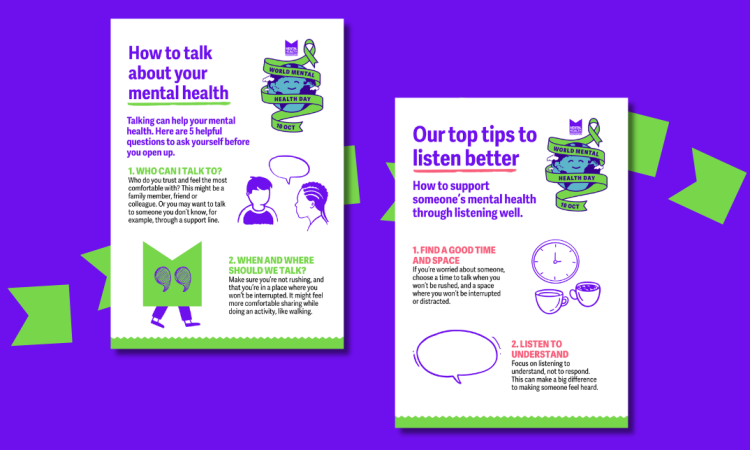
Talking about mental health

World Mental Health Day is a great opportunity for us to come together to talk about mental health and show everyone that is matter. 

Talking is good for your mental health. And talking about mental health is important. But starting a conversation isn’t always easy. Whether you’d like to talk to someone about how you’re feeling, or check-in with someone you care about, here are some tips that can help.   

1. Choose someone you trust to talk to  

This might be a friend, family member or a colleague. Or you might be more comfortable talking to someone you don’t know, for example, through a support helpline. It can help to do a pros and cons list about talking to someone.  

2. Think about the best place to talk

It’s important to choose a place where you feel comfortable enough to open-up. You might want to choose somewhere private where you’re less likely to be disturbed. You also might want to talk while you do an activity, like walking together.  

3. Prepare yourself for their reaction

Hopefully, you will have a good experience when you open-up to someone. But there’s a chance that they may not react in the way you hope. This may be for different reasons, like they may be worried or not fully understand at first.  If that’s the case, try to give them time to process what you’ve told them. It might help to give them information to read to help them understand. And don’t forget to be kind to yourself and practise self-care. 

1. Find a good space to talk without distractions

If you’re worried about someone, try to find a place where you know you can have a conversation without being distracted. Make sure to give them your full attention. It might help to switch off your phone.  

2. Listen and ask questions

Listening can be one of the most valuable ways to be there for someone. Show them that you’re actively listening by facing them, making eye contact, and not interrupting. Questions can help you clarify what they mean and also show that you’re actively listening. But make sure the questions are relevant to what they’re saying, and not changing the subject.    

3. Ask how you can help

Ask how you can help or make suggestions, rather than telling them what to do next. They might want support with making a GP appointment, help around the house, or just for you to keep things normal and chat about what’s going on in your life.

Get help

If you or someone you know is struggling with their mental health, you are not alone, and there are places you can go to get help.

Find help
Illustration of two purple speech bubbles on an orange background