
Location: United Kingdom
'Adulting' when you get to uni can leave you feeling overwhelmed and stressed. We're students from the University of Sussex who have felt this way. We want to share tips and tricks on managing your finances and workload to help reduce this stress.
Tips from students for you...
Managing your finances
Managing finances can be stressful, and it is common to have financial difficulties that affect our mental health. In the last year, 22% of those who participated in a survey attributed high-stress levels to debt worries. Having the tools to help you manage your finances effectively can relieve some of the stress and pressure you may feel about money.
Ways to manage your finances
- Setting a budget can guide you towards where you can and cannot spend more. Remember that everyone’s budget will be different as we all favour different aspects of life. Check out Save the Student's budget calculator.
- Loans can provide a short-term solution to help you, but remember that they need to be paid back with interest, which can lead to stress. Make sure to get advice first.
- Talking about your financial worries can help. You may learn something useful and realise that a lot of people are going through similar worries to you – you are not alone. Places like your uni’s Student Services, Money Helper’s helpline or text service or Citizens Advice can provide information about options available to you.
- Things like food and clothes can rain your money if you don’t learn how to spend smartly. Check out our IGTV on ‘how to cook on a budget’ and check out Student Minds webpage on finance and lifestyle for more spending life hacks.

Managing your workload
Managing your workload as a student is not always easy. And you may find the difference in your workload at uni compared to when you were at school and college challenging. If this affects your mental health, please remember that you're not alone.
- Keep track of all your deadlines, and keep important dates and tasks in one place. You may choose to write them down in a notebook, put everything in an excel/ word file, set reminders on your phone/ laptop or even use a notice board.
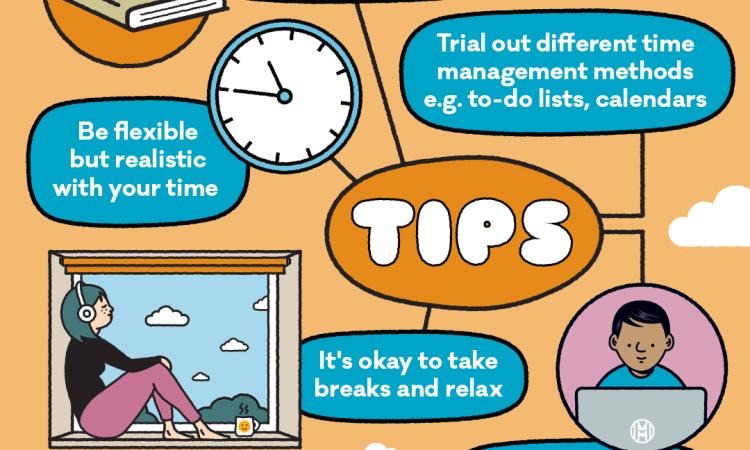
- Trial different time management methods, e.g., to-do lists and calendars. What works for someone else may not work for you, so it’s worth finding out what works best for you.
- Take time regularly to sit and plan out your workload.
- Be flexible but realistic with your time. It may be a good idea to schedule which dates and times are best for you to work on an assignment before the deadline.
- It’s okay to take breaks and relax. It’s important you look after yourself and are in a good headspace to complete your work.
This campaign was co-produced between students at the University of Sussex and the Mental Health Foundation. It has been funded by Office for Students.