

The impact of racism on mental health
Research: the impact of racism on the mental health of ethnic minority communities in the UK. Published October 2026.

Racism is not a single event. For many people from ethnic minority communities, it is part of everyday life. It shapes where people go and whether they feel they belong. Our new research asks what that means for their mental health.
Our study examines the experiences of people from five of the UK’s largest ethnic minority communities: Black African, Black Caribbean, Indian, Pakistani and Bangladeshi.
The research suggests that the mental health impact of racism is not limited to individual incidents. It can build over time through the sustained effort of anticipating and managing racism, including deciding whether it is safe to challenge it. This includes dealing with experiences that are frequently minimised or dismissed.
Key statistics
About the research
The research shows where racism is experienced and how people respond to it. It also shows how its effects on mental health can build over time.
This is one of only a few large-scale mixed methods studies of racism and mental health in the UK.
We held 12 focus groups with 91 people from Black African, Black Caribbean, Indian, Pakistani and Bangladeshi communities. The groups came from Birmingham, Glasgow, Leeds/Bradford, Cardiff, Belfast and London.
What people told us shaped a YouGov survey of 2,506 adults from the same five communities, living across England, Scotland, Wales and Northern Ireland.
Racism in everyday life
Our findings show that racism is often experienced through everyday interactions rather than only through overt abuse or physical threats. People spoke about comments disguised as jokes, being treated with less respect, having assumptions made about them and being viewed with suspicion because of their appearance or background.
- 70% told us that they experienced unfair treatment in the previous year.
- Among those affected, 61% changed their behaviour as a result.
- The most common changes were avoiding certain places, routes or times of day (29%) and avoiding large crowds or events (24%).

“I know I shouldn’t wait for something substantial to happen to challenge it, but often I feel like if it’s not substantial, in the past, if you challenge something which just has a subtle hint of racism, you’re going to be the one that comes off looking worse. I’ve learned that from experience.”

Racism in the workplace
Nearly half of working respondents (45%) experienced at least one form of racism at work in the previous year.
The most common form was workplace “banter” or jokes about race, ethnicity or religion (38% of those affected). Around 1 in 4 experienced racism in workload allocation (28%) or in promotion or career advancement (27%). Almost two-thirds of those who experienced racism (63%) felt they had to work harder than others to prove themselves because of their background.
Few people report what happens to them. Around 1 in 10 of those who experienced racism reported an incident in any setting. At work, 56% of those who had experienced racism there said they were not confident that HR or management would take them seriously. Among people who reported an incident anywhere, 41% were dissatisfied with the outcome.
Having to see your other colleagues get help to be promoted and you are always left behind. You are not asked for your opinion at work … you just … you just feel like you’re part of the team, but you’re not part of the team.”
Racism in everyday spaces and essential services
Racism also affects how people navigate public spaces and essential services.
Nearly half (48%) of those who had experienced racism in the previous 12 months said it had happened on the street or in public spaces. Some people said they avoided particular places and routes, changed what they wore or stayed closer to their own community for safety and support.
Education
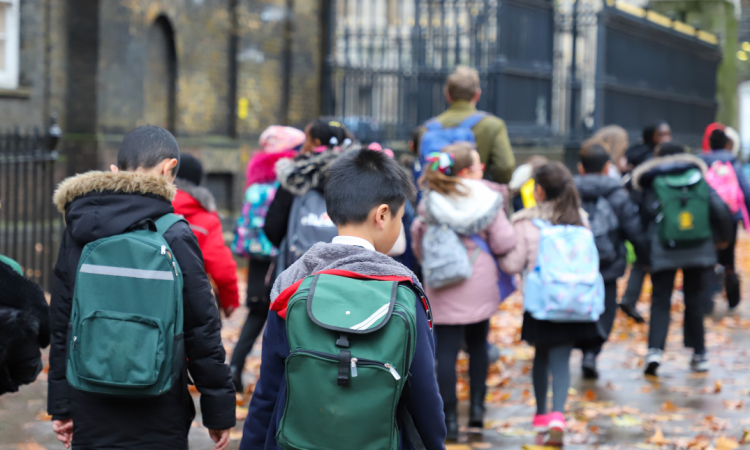
Racism can affect people's experience of education.
- Nearly half (47%) of respondents currently in education said they had experienced racism.
- Among those affected, 44% had avoided classes, events or spaces at least rarely as a result.
This is based on a small group of 91 people.
Healthcare
Racism also affects people's experiences of healthcare.
- Almost a quarter (24%) of respondents who had accessed healthcare in the previous year experienced racism in that setting.
- Among those affected, half said their symptoms had been dismissed or not taken seriously, while 36% had delayed or avoided appointments as a result.
You get to that point where you’re just so tired of talking. There’s just no point … It’s like talking to a brick wall … if you’re complaining in healthcare about racism, it is pointless.

Racism, politics and belonging
People's mental health can be affected not only by racism directed at them personally, but by the wider environment around them.
More than half of respondents (51%) encountered negative media coverage about immigrants or minorities weekly or daily, rising to 57% for negative content on social media. More than half of respondents (54%) felt upset, anxious or stressed at least monthly after seeing or hearing about racist incidents happening to others.
This wider climate also shapes people's sense of belonging. While 68% felt connected to the UK and 63% felt proud to live here, almost half (47%) felt they had to prove that they “really” belonged. Only 39% agreed that others accept them as British.
For some, it is the news that affects their mood, not only what happens to them.
Even when you watch the news and you see all the riots and stuff, those are the things that make me feel depressed. It’s not necessarily when things happen to me, because as I said, I’m quite a happy person.
The effects add up
Three in four (75%) of those who had experienced racism said that experiencing or witnessing it had affected their mental health. For 4 in 10 (40%), it had more than a small effect.
In the four weeks before the survey, around half of those who had experienced racism said they felt angry or frustrated (51%) or anxious or worried (52%) on at least several days because of experiences of racism. 44% felt on edge or constantly watchful in public. 40% wanted to withdraw from social situations.
A third (33%) said the cumulative effect of racism over time had worn them down. Separately, 33% said racism had affected their sense of who they are and their self-confidence.
Sometimes I feel like I’ve lost my identity … Somewhere along the line my confidence has been dented so much.

How people cope with racism
Few people turn to professional support.
Walking away was the most common response to racism (44%), followed by talking to friends (36%) or family (34%) and ignoring what had happened (33%). Around 1 in 20 (5%) said they typically seek professional support such as counselling or therapy.
For many participants, friends, family and community were important sources of support. Being able to talk to someone with shared experiences could provide validation without having to explain why an experience was racist or why it hurt.
When you can have support from another individual who’s also experienced the same racism … talking is a great way of validating those feelings.
What needs to change
Participants wanted reporting systems that lead to meaningful action and institutions that enforce their own policies. They also asked for culturally relevant support and for anti-racism education from an early age.
Tackling racism and its mental health consequences requires more than asking people to report incidents. It means preventing racism and making institutions responsible for creating environments in which people are safe, respected and treated fairly.
Based on these findings, we are calling for action across government, healthcare, workplaces and education.
We are calling for six changes:
- Embed racism as a recognised driver of poor mental health. Build it into health policy and services across the UK.
- Make institutions accountable for preventing racism. Prevention, not only handling complaints.
- Address the mental health cost of racism at work. Treat it as an occupational health concern.
- Strengthen anti-racist education. Start from early years and include teacher training.
- Improve formal mental health support. Make services work for people affected by racism who want help.
- Resource the informal support people actually use. Fund community and faith-based organisations.