
New review of evidence on the use of Artificial Intelligence chatbots for mental health highlights urgent need for further research
Location: United Kingdom
Digital technologies increasingly shape how people seek advice and support for their wellbeing. Alongside social media and online communities, general-purpose generative AI (GenAI) chatbots – such as ChatGPT, Google Gemini and Claude – are a growing source of mental health information and emotional support for people in the UK.

As more people use AI chatbots in their day-to-day lives, questions are emerging about who uses these tools, why they are attractive, how they fit alongside existing support, and what risks and opportunities they may present to public mental health.
To investigate these questions, the Mental Health Foundation research team, with support from Costello Medical, carried out a rapid evidence review and gap analysis of published research. We screened nearly 600 academic and grey literature sources – including peer-reviewed journal articles, third sector and government reports, and expert commentaries – to identify a final 23 publications to include in this review.
Research on AI and mental health is growing rapidly, as the technology itself continues to evolve. We focused on UK evidence published between 2023 and 2026, reflecting both the pace of change and differences in AI regulation around the world. By bringing the latest evidence together, this review can help policymakers, regulators and professionals working in mental health and digital health better understand this emerging area.
The review shows what we know so far, where evidence is beginning to emerge and where important gaps remain. Overall, research on AI and mental health is still at an early stage, with more questions than answers. Identifying these gaps helps to show where further research is most urgently needed.
What do we know?
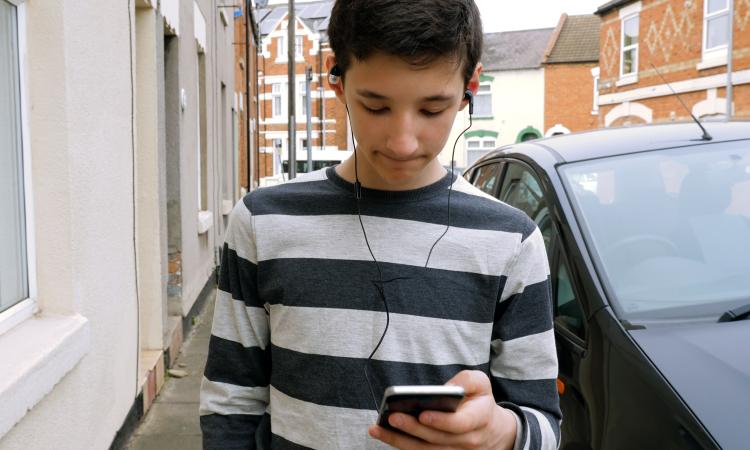
AI use for mental health support is common, especially among younger people.
An estimated 18% of adults and 25% of young people aged 13-17 have used AI for mental health support in the past year (Mind, 2026; Youth Endowment Fund, 2025).

Reasons for AI use closely mirror barriers to accessing mental health care.
The appeal of AI chatbots sits against a backdrop of restricted service hours, time-limited treatment and mental health stigma that can discourage people from seeking professional help. In contrast, AI users perceive chatbots to be non-judgmental and a source of instant, anonymous support at any time of day, which may feel easier and safer than disclosing mental health difficulties to a professional (Alvarado-Torres et al., 2026; Youth Endowment Fund, 2025). Long waiting times for mental health services are also reported as a motivator for AI use (Mental Health UK, 2025).

Most people report positive experiences – however, there is serious risk of mental health harm.
Up to three quarters of chatbot users rate them as beneficial or helpful for emotional and mental health support, and describe feelings of relief, emotional uplift and gratitude (Luo et al., 2025; Mental Health UK, 2025). However, one in ten people said chatbot use triggered or worsened symptoms of psychosis, anxiety, depression, self-harm or suicidal thoughts (Mental Health UK, 2025). Even if harmful experiences are less commonly reported, their potential severity makes them a critical concern.
Trust in AI may be greatest among those who are least able to assess its risks.
Children and young people report higher levels of trust in AI than adults. Among 9- to 17-year-old chatbot users, half were confident that the advice they received was true and 40% had no concerns about following chatbot advice (Internet Matters, 2025). Trust is even higher among children with learning differences or physical or mental health conditions requiring professional support (Internet Matters, 2025). Some groups considered particularly at risk – including children with special educational needs and disabilities (SEND) and young people who have experienced violence – are also more likely to use AI chatbots than their peers (Internet Matters, 2025; Youth Endowment Fund, 2025). These patterns raise concerns about exposure to AI-related harms among vulnerable young people.
What don't we know?
The medium- and long-term effects of AI use on mental health.
Although some people say that using AI has helped them feel better, we found no research investigating whether AI chatbots lead to measurable changes – positive or negative – in wellbeing, help-seeking or any other longer-term outcomes. We therefore do not yet know the mental health consequences of widespread AI use.
Interactions between AI chatbots and other support seeking.
Some publications reported on rates of professional mental health support among AI chatbot users. However, they do not tell us how AI chatbot use may influence someone’s decision to access therapy or mental health services – in what situations does AI replace, delay, or encourage formal help-seeking? The impacts of AI use on personal relationships, loneliness and social isolation are also unknown.

The protective factors that could make AI safer for mental health.
We found no research showing which chatbot features or user practices could make AI safer for mental health support, such as effective safeguards, adult involvement, digital literacy or guidance from parents and schools. As a result, there is little evidence-based guidance for people using AI to support their mental health, or for developers and regulators working to reduce potential harms.
Experiences of AI use across diverse groups.
Most research has focused on children and young people. We know far less about the experiences of older adults, neurodivergent people, racialised communities, rural communities and other groups whose needs and circumstances may shape how they use AI.
What’s next?
This review provides a starting point for future research to address the important evidence gaps we identified. Making sure people’s online lives are healthy is a core strategic priority for the Mental Health Foundation. The findings will help us and other researchers focus on the questions that matter most, including how to safely realise the potential benefits of AI chatbots for mental health while preventing harm.
This review is the first phase of an ongoing Mental Health Foundation study using peer research and online ethnography to explore the opportunities and risks of using AI chatbots for mental health support. We will publish the findings in spring 2027.
Sign up to our newsletter to be the first to know about the Mental Health Foundation’s new publications.
We gratefully acknowledge Costello Medical for its pro bono support carrying out the evidence review and gap analysis.
- Alvarado-Torres, R., Kakauridze, I. and Bonnevie, E. (2026) ‘AI chatbots as emerging tools in youth mental health help-seeking: insights from New Jersey youth’, medRxiv [Preprint]. Available at: https://doi.org/10.64898/2026.06.02.26354131
- Internet Matters (2025) Me, myself and AI: understanding and safeguarding children’s use of AI chatbots. Internet Matters. Available at: https://www.internetmatters.org/wp-content/uploads/2025/07/Me-Myself-AI…;
- Luo, X., Wang, Z., Tilley, J.L., Balarajan, S., Bassey, U.A. and Cheang, C.I. (2025) ‘Seeking emotional and mental health support from generative AI: mixed-methods study of ChatGPT user experiences’, JMIR Mental Health, 12, e77951. Available at: https://mental.jmir.org/2025/1/e77951
- Mental Health UK (2025) ‘Over one in three using AI chatbots for mental health support, as charity calls for urgent safeguards’, Mental Health UK: News and insights. Available at: https://mentalhealth-uk.org/news-and-insights/over-one-in-three-using-a…
- Midland Health (2025) ‘Brits struggling to access mental health support turn to AI chatbots’, Midland Health news. Available at: https://midlandhealth.co.uk/news/brits-struggling-to-access-mental-heal…
- Mind (2026) ‘Experts raise the alarm over rise in use of AI for mental health support over traditional services’, Mind news. Available at: https://www.mind.org.uk/news-campaigns/news/experts-raise-the-alarm-ove…;
- Yankouskaya, A., Almourad, M.B., Liebherr, M., Beyahi, F., Xu, G. and Ali, R. (2026) ‘Who lets AI take over? Cross-national variation in willingness to delegate socially important roles to artificial intelligence’, AI & Society, 41(6), 6151-6169. Available at: https://doi.org/10.1007/s00146-026-02858-5
- Youth Endowment Fund (2025) ‘AI and Teenagers: One in four teens using AI chatbots for mental health support’, Youth Endowment Fund news. Available at: https://youthendowmentfund.org.uk/news/one-in-four-teens-turn-to-ai-cha…;