
The Foundation Reports
Location: England, Northern Ireland, Wales, Scotland
Many of the things we need to stay mentally healthy, like a safe and warm home, access to timely mental health support and a decent income, are becoming increasingly hard to access.
And certain groups of people, such as those in poverty or living in unstable housing conditions, are experiencing poor mental health at a much higher rate than others.
When people face persistent disadvantage and are exposed to more harmful circumstances, the risk of experiencing mental health problems increases. This unequal and preventable distribution of risk is referred to as mental health inequalities – a reflection of broader injustices that demand action.
As part of our mission to prevent poor mental health, we set out to identify the most urgent and actionable priorities for reducing mental health inequalities in the UK.

Key opportunities for change
We brought together a panel of 51 mental health professionals and experts by experience to identify the most pressing and actionable social determinants for reducing mental health inequalities experienced by particular groups in the UK.
The expert panel identified six key factors likely to have the greatest impact on reducing rates of poor mental health and mental health inequalities:
- Financial insecurity
- Housing and household conditions
- Identity-based mistreatment
- Employment
- Social connection
- Access to mental and physical health support
A key insight from the panel was that these six determinants are deeply interconnected. Tackling them in isolation won’t work. We need coordinated, cross-sector approaches that reflect how these issues compound and reinforce one another.
Financial insecurity
Financial insecurity refers to a household’s inability to respond to unexpected essential expenses or cost-of-living increases due to limited income or savings. In some cases, this forces people to make difficult choices between paying bills, eating or heating their homes. 1
There is growing evidence that financial insecurity - the absence of an adequate financial safety net - is detrimental for mental health.2

Call to action - financial insecurity
To mitigate the impact of financial insecurity, the UK and devolved governments should:
- remove the two-child benefit cap
- end policies that cause poverty and destitution for people seeking asylum
- regularly update the minimum wage
- fund and uprate Child Payments
Housing and household conditions
Access to safe, secure and suitable housing is a fundamental determinant of good mental health. 3Evidence consistently shows that poor-quality or unstable housing can negatively affect mental health, contributing to increased levels of stress, depression and anxiety.4 These challenges are intensifying amid the UK’s housing crisis.
While access to secure and affordable housing is fundamental, housing and household conditions – including emotional and psychological safety at home - also play a critical role in shaping mental health outcomes, particularly for those facing socio-economic disadvantage, housing insecurity or domestic abuse. Addressing these challenges requires policies that go beyond affordability to ensure safety, stability and quality in the places we call home.

Call to action - housing and household conditions
The UK government should:
- make the Household Support Fund permanent in England
- End no fault evictions in England
- ensure new housing is designed with mental wellbeing in mind
- speed up decision-making of asylum applications
Governments across the UK must:
- embed mental health support within tenancy support services
- urgently address the housing conditions of refugees and people seeking asylum
- invest in social housing
- give tenants the right to raise concerns about mould and damp issues
Identity-based mistreatment
Identity-based mistreatment includes various forms of unjust, harmful and discriminatory treatment that are motivated by characteristics such as race, gender, sexual orientation, disability and religion. Importantly, these are not isolated acts of hatred and prejudice. Rather, they reflect systemic injustices which extend throughout society.
Around one-fifth of people from racialised communities have experienced discrimination while seeking housing, and over a third have experienced discrimination in education and employment.5 This not only limits access to safe and stable living conditions but also reinforces cycles of economic disadvantage.

Call to action - tackling identity-based mistreatment
To tackle identity-based mistreatment:
- schools should implement robust anti-bullying policies
- the UK government should monitor the implementation of the Online Safety Act
- the UK government should develop a national strategy to support refugee integration
- politicians should use inclusive and respectful language that promotes community cohesion, tolerance and social inclusion.
Employment
Secure, stable and supportive employment can protect and promote positive mental health, providing financial security, social connection and a sense of purpose.
While good work supports mental health and wellbeing, research shows that poor-quality work, including jobs that are insecure, low-paid or stressful, can be more harmful for mental health than unemployment.6
Certain groups are disproportionately affected, including young people, individuals with limited qualifications or skills, people with disabilities or mental health conditions, carers, lone parents, older workers and those from some ethnic minority backgrounds.7

Call to action - employment
The UK government should:
- regularly update the minimum wage
- introduce laws to reduce job insecurity and in-work poverty
- review the flat rate of statutory sick pay
- introduce incentives for employers to support mental health
Social connection
Loneliness and social isolation can happen at the same time, but they are different concepts – isolation refers to how many connections a person has, and loneliness refers to how we feel about those connections.
People who often feel lonely are over five times more likely to experience poor mental health8. And there is strong evidence linking social isolation with lower levels of psychological wellbeing. 9
While social isolation can affect anyone, broader social, economic and structural factors increase the likelihood of a person becoming isolated. Research shows that marginalised groups, including people with disabilities, LGBTQ+ people, migrants, refugees and people from ethnic minorities, often experience higher rates of social disconnection.10

Call to action - social connection
Governments across the UK should:
- fund and support anti-loneliness programmes
- develop and implement interventions to prevent loneliness among children and young people
Access to mental and physical health support
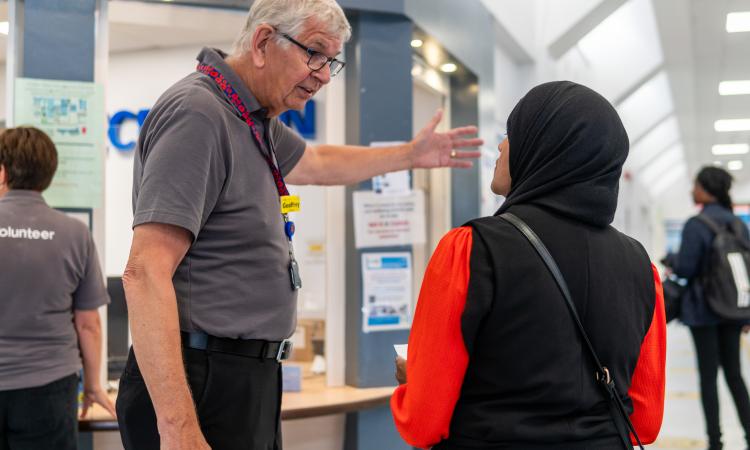
Access to good-quality, culturally competent healthcare is essential for supporting good mental health and preventing poor mental health.
But we don’t all have equal access to timely, good quality healthcare. People experiencing social and economic disadvantage often face additional barriers to accessing support. Certain racialised communities also have systematically different experiences within the services that they use, including the quality of care and treatment they receive.11
To reduce mental health inequalities, it is essential to invest in inclusive, adequately resourced and culturally competent health support that meets the needs of those most affected.
Call to action - improving access to support
The UK government should:
- ensure that sufficient funding is available to deliver the reforms promised in the Mental Health Bill
- support the roll-out of the Patient and Carer Race Equality Framework, making this statutory to drive adoption
- ensure that healthcare services are accessible, and delivered in a culturally competent way, for asylum seekers and refugees
1 Hardy G, Lane J. Walking on Thin Ice: The Cost of Financial Insecurity. Citizens Advice; February 22, 2018. Accessed October 16, 2025. citizensadvice.org.uk/wales/policy/publications/walking-on-thin-ice-the-cost-of-financial[1]insecurity/
2 Wenham A, Clark T. Anxiety Nation? Economic Insecurity and Mental Distress in 2020s Britain. Joseph Rowntree Foundation; November 10, 2022. Accessed October 16, 2025. jrf.org.uk/savings-debt-and-assets/anxiety-nation[1]economic-insecurity-and-mental-distress-in-2020s-britain
3 Marmot M, Goldblatt P, Allen J et al. Fair Society, Healthy Lives (The Marmot Review). Institute for Health Equity; February, 2010. Accessed October 16, 2025. instituteofhealthequity.org/resources-reports/fair-society-healthy[1]lives-the-marmot-review
4 Marmot M, Allen J, Boyce T, Goldblatt P, Morrison J. Health Equity in England: The Marmot Review 10 Years On. Institute of Health Equity; 2020. Accessed October 16, 2025. instituteofhealthequity.org/resources-reports/marmot-review-10-years-on
5 Ellingworth D, Bécares L, Šťastná M, Nazroo J. Racism and racial discrimination. In: Racism and Ethnic Inequality in a Time of Crisis, Findings from the Evidence for Equality National Survey. University of Bristol Press. April 12, 2023;54–77. ISBN: 978-1447368847
6 Marmot M, Allen J, Boyce T, Goldblatt P, Morrison J. Health Equity in England: The Marmot Review 10 Years On. Institute of Health Equity; 2020. Accessed October 16, 2025. instituteofhealthequity.org/resources-reports/marmot-review-10-years-o
7 ibid
8 Personal relationships. The Health Foundation; 2024. Accessed October 16, 2025. health.org.uk/evidence-hub/family-friends-and-community/personal-relationships/personal-relationships
9 Hilliard D, Beloe P, Turner-Harris L et al. Investigating the Impact of Loneliness and Social Isolation on Health. NESTA; August 28, 2024. Accessed October 16, 2025. nesta.org.uk/report/investigating-the-impact-of-loneliness[1]and-social-isolation-on-health
10 From Loneliness to Social Connection: Charting a Path to Healthier Societies. Report of the WHO Commission on Social Connection. World Health Organization (WHO); 2025. Accessed October 16, 2025. who.int/publications/i/item/978240112360
11 Jefferies D, Williams E, Buck D, Babalola G, Maguire D. What are health inequalities? The Kings Fund; 2022. Accessed October 16, 2025. kingsfund.org.uk/insight-and-analysis/long-reads/what-are-health-inequalities