
It’s normal to feel down from time to time when we come across bad news, but constant exposure to negative online content could negatively affect our mental health.
Keeping up with the latest news is simpler than ever thanks to smartphones and social media. However, it’s easy to end up doomscrolling – constantly scrolling through negative news for long periods of time.1
Doomscrolling is a natural and human response to a world that can feel unstable. However, it can also affect our mental health. While online content can help us feel more informed, reassured and in control, doomscrolling can cause us to become more anxious, sad, or overwhelmed.2
Understanding why we doomscroll and the effect it can have on our wellbeing allows us to create positive changes in managing our mental health.
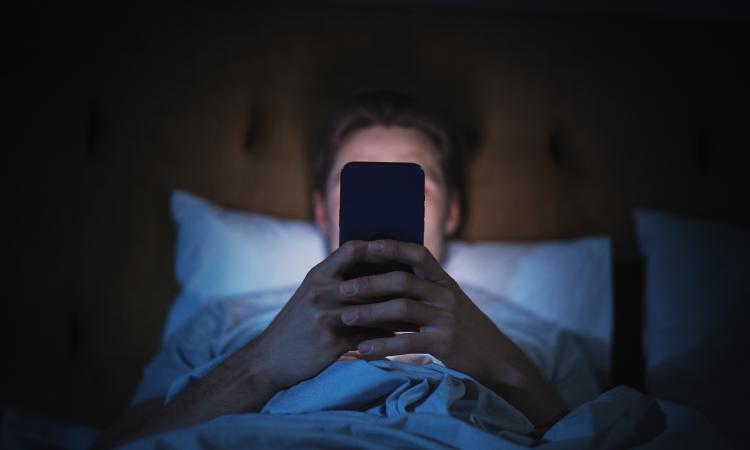
Why do we doomscroll?
Doomscrolling often begins with good intentions: wanting to learn more about a topic so that we can understand it and feel prepared. This makes sense when we think about it in terms of human survival. Our brains are naturally wired to be on the lookout for threats so we can prepare ourselves for whatever comes our way.
We may also doomscroll because we want to feel in control, stay connected with what’s happening in the world, or because we don’t want to miss out on anything important.
However, with round-the-clock news updates available with a single tap on a phone screen, it’s easy to get drawn in to reading negative story after story. So what starts out as information gathering can quickly turn into an unconscious habit that can leave us feeling overwhelmed and anxious.
In the past few months, keeping up the with the news has made me incredibly anxious, frustrated, upset, and angry. It’s impacted my ability to focus at work, my sleep pattern and quality of sleep, and my relationships.
The impact of doomscrolling on mental health
Feeling overwhelmed by doomscrolling isn’t uncommon. An overload of negative information can cause us to worry more, feel irritable, have difficulty concentrating, feel guilty and find it hard to “switch off” mentally.5
In fact, doomscrolling can fuel a negative cycle of feeling low or worried, triggering us to continue scrolling content in attempts to feel better, often causing us to end up feeling worse.
But the impact of doomscrolling on mental health isn’t just emotional; it can be physical too.
For example, doomscrolling can result in physical issues such as headaches, nausea, neck and shoulder pain or even difficulty sleeping.3,4
This may be because doomscrolling triggers our ‘fight, flight, freeze’ response, causing raised blood pressure and increased stress hormones. Even keeping our bodies in an ongoing fixed posture when scrolling can contribute to this effect.
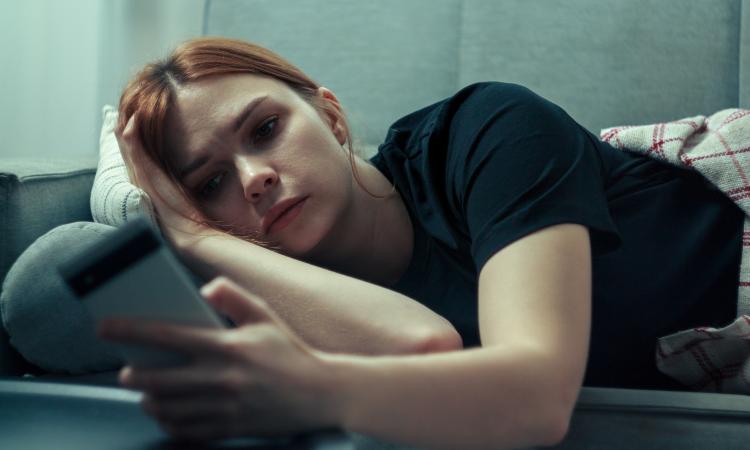
I have a constant sense of anger (at what is happening) and anxiety (feeling the world is not a safe place).
Spotting the signs of doomscrolling
Doomscrolling can be so automatic that you may not even realise you are doing it.
Here are some of the most common signs that doomscrolling may be negatively affecting your mental health:
● feeling anxious, tense, or low after checking the news
● scrolling for much longer than you meant to
● checking for news updates multiple times an hour
● feeling emotionally drained or ‘numb’ after your scrolling sessions
● struggling to ‘switch off’ from the outside world.
It’s important to know that these are natural responses to constant exposure to distressing news. If you resonate with any of these, know that you’re not alone. We share some tips below for managing doomscrolling that you may find helpful.

Practical tips to manage doomscrolling
If you’re looking for ways to spend less time doomscrolling, try these tips:
Turn off push notifications
Turning off instant alerts for social media or news apps can give you a break from anxiety-provoking information. This is easy to do; simply go to your phone settings and choose which apps you want to get alerts from and which ones you don’t.
Use a watch or an alarm clock
If you often doomscroll in bed, it may be because your phone doubles as your alarm clock. Switching to using a watch or a physical alarm clock may help. This way, you can leave your phone in a different room and break the habit of absorbing negative information that could affect your sleep.
Manage your social media feeds
Your social media feed is like having a personalised newspaper – you get to decide what content you see. You could make changes to what appears on your feed by blocking or hiding certain profiles, allowing you to limit the negative content you are exposed to.
Set a time limit
Setting a time limit on your scrolling can help, as long as you stick to it. For instance, you could try setting an alarm to restrict time spent on news apps. Or, try limiting your scrolling to the time it takes to make a cup of tea. Find something that gives you a gentle signal that it’s time to put the phone down.
Consider phone-free zones
If you find yourself regularly doomscrolling in certain places, creating a ‘no-phone zone’ may help you reduce your time spent online. For example, if you use the phone at mealtimes or in bed, you could consider making the bedroom or dining area a phone-free zone. You’re allowed to have quality time that isn’t interrupted by notifications every few minutes.
Balance the negative with a positive
For every doomscrolling session you have, you could choose to balance it out by doing something positive for your emotional health. Mindfulness, reading, spending time with others, and exercising are all great self-care activities that can benefit your wellbeing.6
Prioritising your wellbeing
Doomscrolling can become a habit without you even realising it, but you can take back control. Doing so doesn't mean you don’t care about the world anymore – it means you recognise that taking care of your mental health is important.
Read our tips for managing feelings of overwhelm
References
- Merriam-Webster. (n.d.). Doomscroll. In Merriam-Webster.com dictionary. Retrieved September 9, 2025, from https://www.merriam-webster.com/dictionary/doomscroll
- Anand, N., Sharma, M. K., Thakur, P. C., Mondal, I., Sahu, M., Singh, P., J, A. S., Kande, J. S., Ms, N., & Singh, R. (2021). Doomsurfing and doomscrolling mediate psychological distress in COVID‐19 lockdown: Implications for awareness of cognitive biases. Perspectives in Psychiatric Care, 58(1), 170–172. https://doi.org/10.1111/ppc.12803
- Salamon, M. (2024, September 1). Doomscrolling dangers. Harvard Health. https://www.health.harvard.edu/mind-and-mood/doomscrolling-dangers
- Bhat, S., Pinto-Zipp, G., Upadhyay, H., & Polos, P. G. (2018). “To sleep, perchance to tweet”: in-bed electronic social media use and its associations with insomnia, daytime sleepiness, mood, and sleep duration in adults. Sleep Health, 4(2), 166–173. https://doi.org/10.1016/j.sleh.2017.12.004
- NHS - Every mind matters: dealing with stress Stress - Every Mind Matters - NHS
- Mental Health Foundation. (n.d.). How to manage and reduce stress. Retrieved September 9, 2025, from https://www.mentalhealth.org.uk/explore-mental-health/publications/how-…
Managing fear and anxiety
But when fear and anxiety symptoms become long-term or take over your life it can affect your wellbeing.